
Quick answer
An encroachment agreement is a written agreement between neighbours about a structure that crosses the property line, such as a fence, driveway, shed or part of a building. It records who owns the land, lets the structure stay on agreed terms, and says what happens if it is rebuilt, removed or one of you sells.
It works best with a current survey and a lawyer. Ask your lawyer whether it should be registered on title so that it binds later owners, because the next buyer and their lender will want to see how the encroachment was settled.
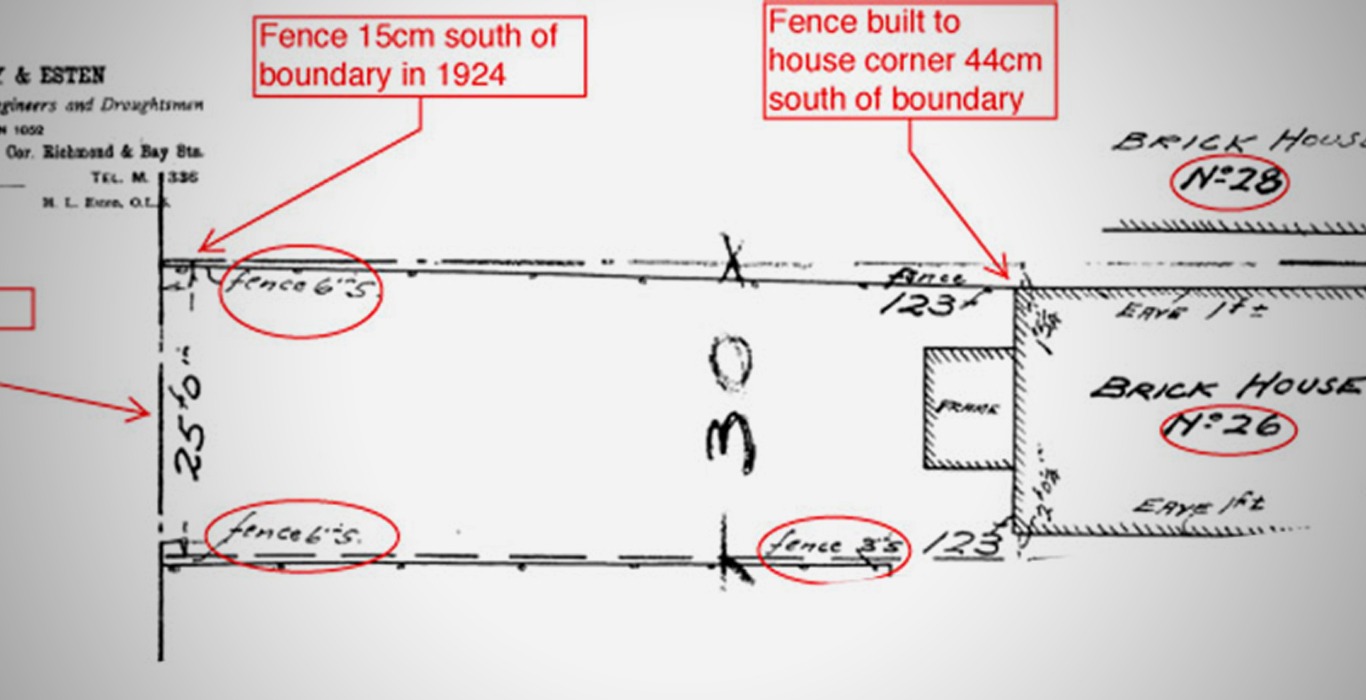
A new survey, a sale or a renovation often shows that a fence, a driveway or part of a building sits over the line. That does not have to end in a dispute. Many neighbours settle it in writing. This article explains what an encroachment agreement usually covers, the other ways to resolve an encroachment, and the steps to take. For the wider picture, see our article on boundary disputes and encroachments.
What an Encroachment Agreement Usually Covers
- The structure: a description of what crosses the line, tied to a survey.
- Ownership: an acknowledgement that the land belongs to the neighbour on whose side of the line it sits.
- Permission and term: whether the structure may stay, and for how long.
- Upkeep and risk: who maintains it, who insures it and who is responsible if it causes damage.
- Rebuilding: what happens if the structure is enlarged, replaced or destroyed.
- Payment: whether any amount is paid for the use of the land.
- Sale: what happens when either property is sold, and whether the agreement binds the new owner.
- Ending it: how the structure is removed if the agreement ends.
The acknowledgement of ownership matters. Under section 13 of the Real Property Limitations Act, a signed written acknowledgement of the owner’s title, given to the owner by the person in possession, restarts the ten-year period in the owner’s favour. Read more in our article on adverse possession in Ontario, and see the Real Property Limitations Act on Ontario.ca.
Other Ways to Resolve an Encroachment
- Move or remove the structure. This is the simplest fix when the structure is small or new.
- Transfer the strip of land. Neighbours sometimes agree to sell or exchange the strip. This usually needs a new survey and reference plan, and a transfer of part of a lot can raise Planning Act subdivision control questions, so ask your lawyer before you sign.
- Ask the court. Section 37 of the Conveyancing and Law of Property Act deals with a person who makes lasting improvements on land believing it is their own. The Superior Court can give that person a lien for the added value, or let them keep the land and pay compensation, whichever is most just in the circumstances. See the Conveyancing and Law of Property Act on Ontario.ca.
Steps to Settle an Encroachment
- Order a current survey from an Ontario Land Surveyor and get the parcel register for each property.
- Talk to your neighbour calmly and in writing, and keep copies. Do not remove or alter anything before you have advice.
- Have a lawyer draft the agreement, tied to the survey, with the terms above.
- Sign it and ask your lawyer whether to register it on title.
- Tell your insurer and, where it matters, your lender.
Buying or Selling With an Encroachment
A buyer’s lawyer will usually ask how an encroachment shown on a survey is being dealt with, and a lender may ask too. A signed, registered agreement is easier to explain than an open problem. Title insurance generally does not cover problems you knew about before you bought, so settle a known encroachment first. See our title insurance guide.
If Your Neighbour Will Not Agree
If talks fail, your lawyer can explain the legal options, which can include a court application, and the time limits that apply. See our real estate litigation service. Act promptly, because delay can affect your rights.
Frequently Asked Questions
What is an encroachment agreement in Ontario?
It is a written agreement between neighbours about a structure that crosses the property line. It records who owns the land, lets the structure stay on agreed terms and deals with rebuilding, removal and sale.
Do I need a survey for an encroachment agreement?
A current survey from an Ontario Land Surveyor is the usual starting point. It shows exactly what crosses the line and lets the agreement describe it clearly.
Should an encroachment agreement be registered on title?
Ask your lawyer. Registration can make the agreement visible to later owners and lenders, which helps on a sale.
Does signing an encroachment agreement affect adverse possession?
A signed written acknowledgement of the owner’s title restarts the ten-year period in the owner’s favour under section 13 of the Real Property Limitations Act. Get advice before you sign.
What if my neighbour built on my land by mistake?
Section 37 of the Conveyancing and Law of Property Act lets the Superior Court decide, in a case of improvements made under a mistake as to ownership, between a lien for the added value and letting the person keep the land with compensation. The outcome depends on the circumstances.
Related: our title search service, our real estate litigation service and our resources hub.
Talk to a real estate lawyer about your property. Call (647) 696-8069 or book a free consultation. We serve clients in English, Hindi and Punjabi.
Legal Information, Not Legal Advice. This article is general information about encroachment agreements in Ontario, based on the Real Property Limitations Act and the Conveyancing and Law of Property Act checked on October 27, 2026. It is not advice on your property, so speak with a real estate lawyer.